
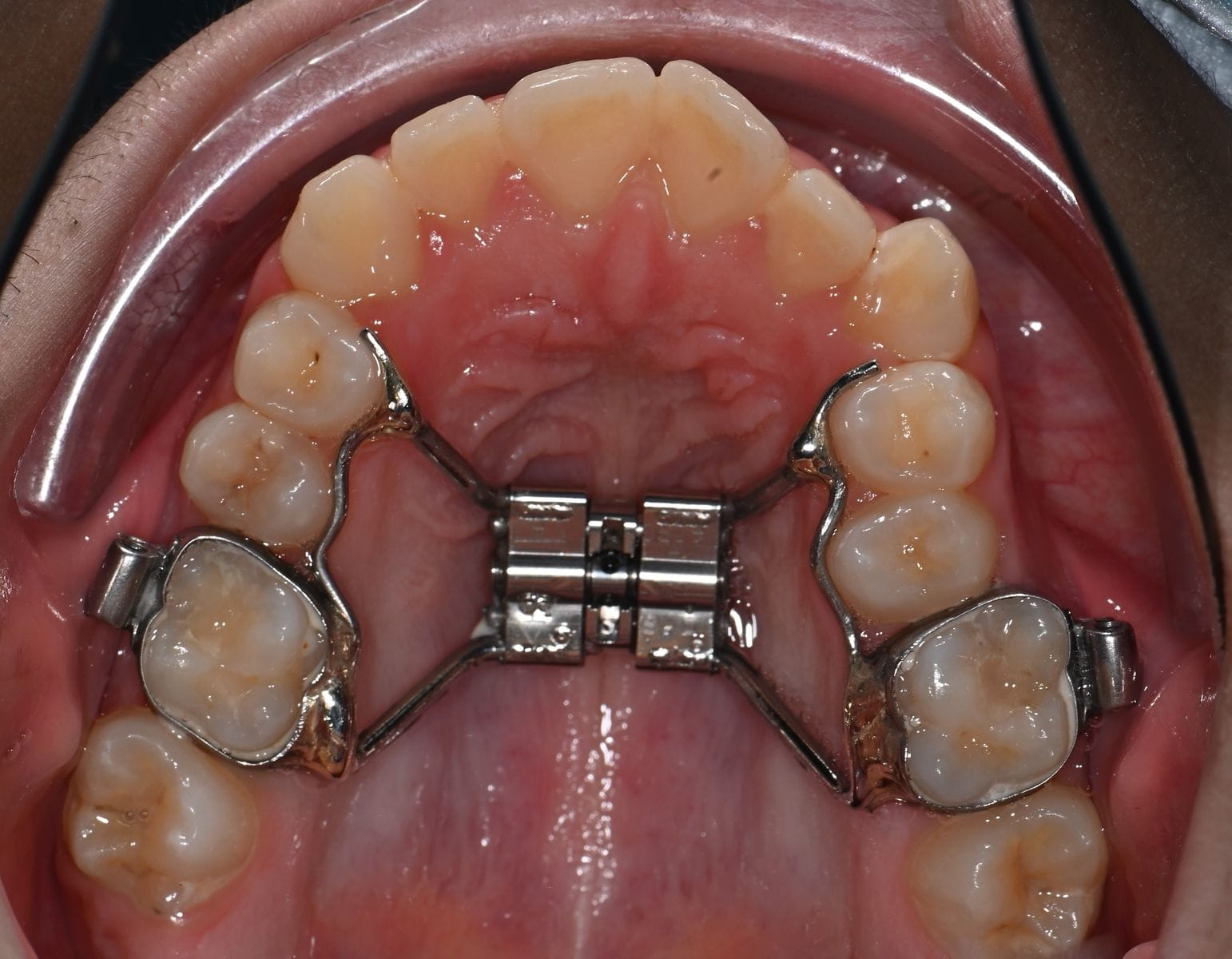
Rapid Maxillary Expansion Al Ain: Specialized Orthodontic Care
Achieving proper facial symmetry and occlusal balance often begins with resolving structural skeletal issues. Rapid Maxillary Expansion Al Ain represents the definitive therapeutic protocol for addressing transverse maxillary deficiency (upper jaw narrowness).
Primary Causes Requiring Rapid Maxillary Expansion Al Ain
A narrow upper jaw is a complex structural condition resulting from a combination of functional habits and physiological factors, including:
- Mouth Breathing: Considered a significant respiratory disorder. Chronic mouth breathing bypasses natural nasal passages, leading to a progressive decrease in the normal transverse growth of the upper jaw over time.
- Prolonged Thumb-Sucking: Engaging in this habit beyond the age of four disrupts the balance of facial muscles, directly contributing to maxillary constriction.
- Congenital Factors: The congenital absence of certain permanent teeth can lead to inadequate localized bone development. Additionally, maxillary deficiency can be a hereditary trait passed through genetics.
Clinical Consequences of a Narrow Maxilla
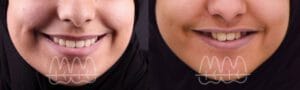
1. Compromised Smile Aesthetics and Rapid Maxillary Expansion Al Ain
A constricted upper jaw often results in prominent “Black Corridors” at the corners of the mouth during smiling. By applying our transverse expansion protocols, we significantly broaden the smile arch, virtually eliminating these dark spaces and revealing a fuller, more radiant display of teeth.
2. Disrupted Teeth Eruption and Crowding
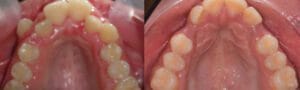
Insufficient maxillary width severely restricts the space required for permanent teeth to erupt into their proper anatomical positions. This deficiency is the primary cause of severe dental crowding and high, buccally displaced, or impacted upper canines.
The Treatment Mechanism: Maxillary Expanders
Regardless of the underlying cause, this condition mandates early medical intervention utilizing a specialized fixed orthodontic device known as an expander. Early implementation ensures superior structural stability and optimal treatment results.
The mechanism of the expander relies on applying controlled lateral forces to the posterior teeth and their supporting alveolar bone. This process corrects posterior crossbites, expands the upper jaw transversely, and creates the vital extra space needed to align crowded teeth. Furthermore, maxillary expansion exerts a highly beneficial effect on respiratory health by physically widening the upper nasal passages.
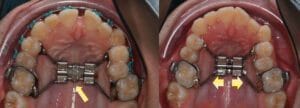
Expected Clinical Progress: The Central Gap
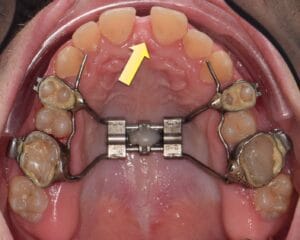
During the active phase of expansion, a temporary gap (diastema) frequently appears between the upper central incisors. This gap is an excellent clinical indicator of successful skeletal expansion at the mid-palatal suture. This space may persist temporarily but will close gradually, either spontaneously or through subsequent alignment with orthodontic braces.
Appliance Designs and Treatment Protocol
We utilize several advanced designs for expansion appliances. While they operate on the same fundamental biomechanical principles, specific details are customized to the individual anatomical requirements of the patient.
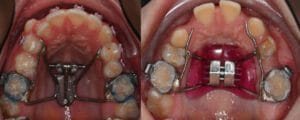
The active expansion process is typically managed by parents at home on a strict daily schedule. It is normal for patients to experience mild discomfort or a sensation of pressure around the nose and posterior teeth during the initial phase. Standard mild analgesics are highly effective in managing this transient discomfort.
Optimal Age for Clinical Intervention
Dr. Khaled Al-Kateb strongly recommends initiating this specific therapeutic protocol around the age of seven if clinical narrowness is detected. Treatment yields highly successful outcomes up to the age of fourteen. However, it is critical to note that as facial bones mature and skull sutures fuse significantly beyond this age, the stability of purely orthodontic expansion decreases. For adult patients (over 18 years), surgically assisted rapid palatal expansion (SARPE) is generally required to achieve a successful outcome.
Correct jaw discrepancies early for a lifetime of stable, healthy smiles.

